


- Language

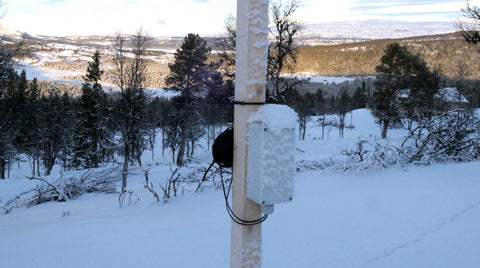
Before installing a small wind turbine, Beat from Switzerland wanted to know if his site truly had enough wind. After setting up his Windlogger on a 12-meter pole next to his barn, he started collecting real wind data for a full year.
With accurate measurements and quick support from the Windlogger team, Beat can now make a confident, data-based decision about expanding his renewable energy system.

Between December 2017 and March 2018, the median temperature was -8°C, with a minimum temperature of -25°C on February 2018. On the other hand, the highest recorded temperature was 28°C on May 2018. According to historical weather data for the measurement site, temperatures can go as low as -30°C.
Two Reasons Why Small-Scale Wind Power is a Great Investment
Small-scale wind power systems can achieve very competitive upfront costs because they require less specialized components compared with larger wind turbines. Also, the UK and other countries with a Feed-in Tariff tend to offer the best incentives for smaller installations.
Feasibility studies for small-scale wind power installations tend to be expensive, when viewed as a percentage of total project cost. However, the WindLogger kit from Logic Energy allows site assessments to be carried out for just a fraction of their normal cost. A feasibility study can make the difference between a highly lucrative project and a wasted investment!
Read MoreWind power is a gamble if the project site is not assessed properly prior to the installation of wind turbines; two identical units can have very different outputs depending on their locations. A very important factor that defines if the project makes sense from the financial standpoint is capacity factor – the percentage of maximum possible output the project will yield.
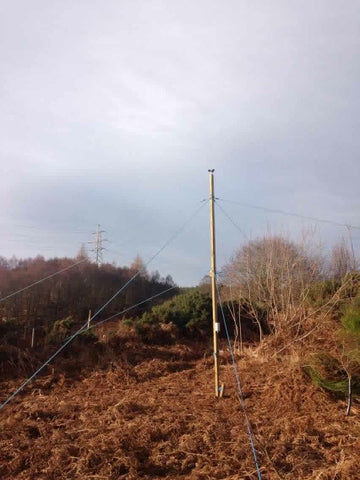
Weather scientists have studied windshear in depth, developing many mathematical models to describe it. Windshear is normally combined with turbulence, which can be described as a random three-dimensional movement of the wind. Turbulence is caused when the wind interacts with natural or man-made obstacles.

The processes that produce wind are complex and dependent on many factors - some examples are air temperature, the distribution of land and water, and even Earth’s rotation. In simple terms, wind is caused by a pressure.

WindLogger: An Affordable and Powerful Tool for Weather Research
Weather monitoring and analysis is commonly associated with renewable energy investments such as wind and solar power. However, it is also a powerful research tool, with the main difference that in research the goal is to generate knowledge rather than profits.
Read MoreSite Assessment for Renewable Energy Projects with WINDLogger in Japan
Although renewable sources provide carbon-free energy, they have an environmental impact during construction. For a truly green project, a feasibility study is required.
Read MoreNASA’s Research on Microscopic Life in Antarctica with WINDLogger
Understanding how microorganisms can thrive in extreme environments here on Earth could provide some insight on how to approach the search of extraterrestrial life.

Wind sensors have a critical role in the wind energy industry.
Construction companies can use historical and live wind data to improve the safety and efficiency of tower crane operations. Historical data helps identify periods with a higher risk of strong winds, allowing contractors to schedule critical lifts more effectively, while live measurements support real-time decisions. By centralising wind data, crane rental companies can provide site-specific forecasts and estimate the likelihood of "winded-off" days, helping reduce delays and improve project planning.


